MG WINERY
The architectural design carefully balances historical character with contemporary expression.

MG WINERY
INTENDED USE
Commercial
LOCATION
Istra, Croatia
SITE AREA
3.500m²
BRUTO
750m²
YEAR
2025
STATUS
Project under development
The winery is located within the compact urban structure of a north-western Istrian town and forms part of a mixed-use building originally constructed in 1911, with a total gross area of 750 m². The project reconstructs a defined segment of the existing structure, previously used as storage spaces and a wine cellar, while preserving the original horizontal footprint of the building.
The intervention include a new upper floor dedicated to a tasting room, conceived as an integral extension of the winery’s operational programme. Access to this level is provided via a staircase integrated into the existing covered passage, allowing for a discreet and leading transition between production and visitor areas. At ground level, a new opening is created on the northern facade, within the protruding volume of the building, enabling direct access from the former storage area to the exterior and improving functionality and circulation.
Existing stone masonry is retained and exposed, forming a continuous base along the street. New additions are articulated through light, warm-toned plastered surfaces that clearly differentiate old from new. The facade composition is defined by tall arched glazing at the vertical circulation core and a narrow horizontal window beneath the roofline, ensuring controlled natural light and visual depth. The roof is finished with traditional terracotta tiles, while doors, shutters and railings are executed in dark metal.
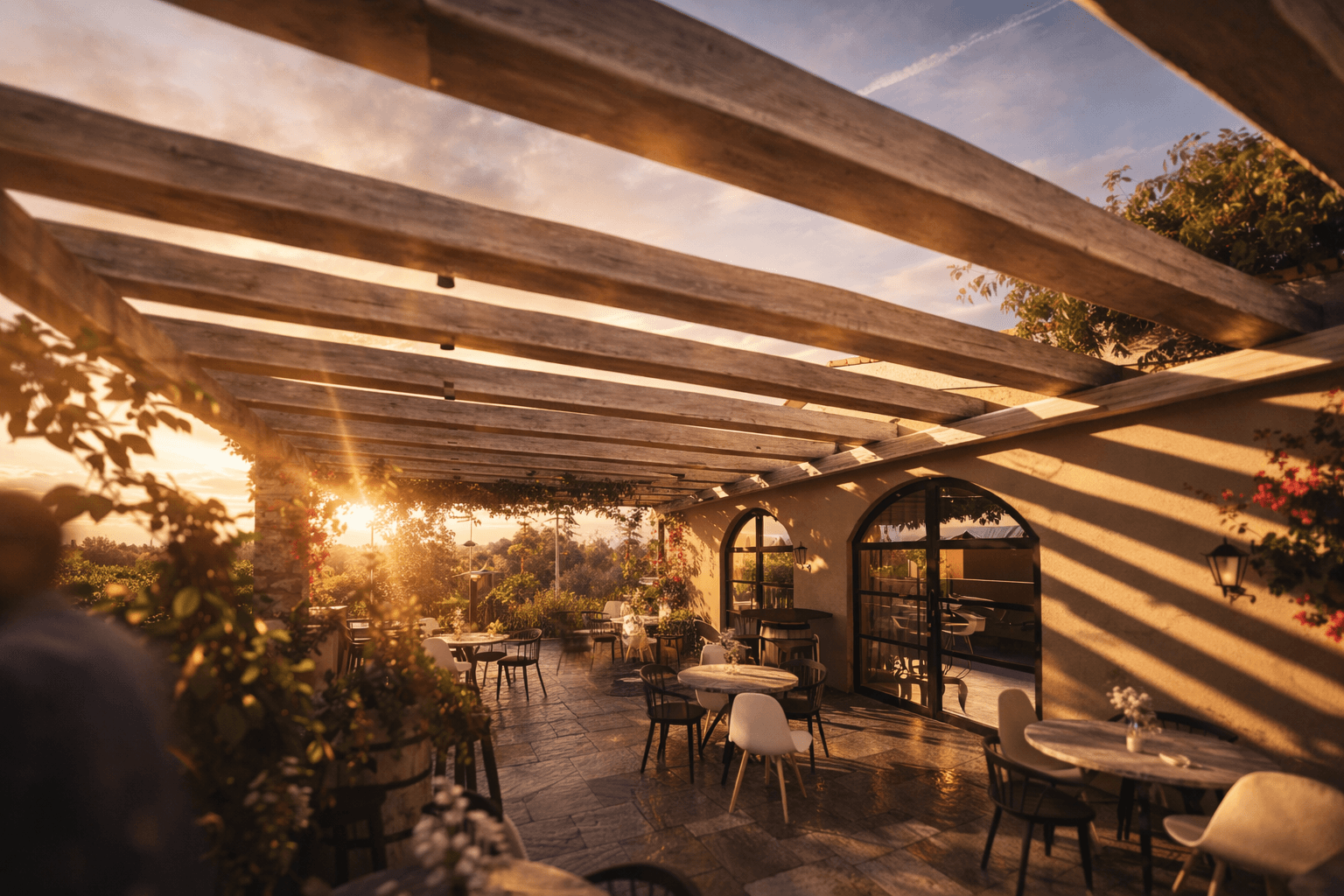
The tasting room extends onto an upper outdoor terrace, shaded by a timber pergola and enriched with climbing vegetation and flowering plants. Stone paving continues seamlessly from interior to exterior, reinforcing material continuity. The surrounding outdoor space is restrained and deliberate, combining low greenery, potted plants and stone surfaces to complement the building without dominating it. The result is an urban winery that is firmly rooted in its historical context while clearly adapted to contemporary use.